By Ilane Tall · Updated August 13, 2026 · Research-based.
Reader-supported: we may earn a commission when you buy through the links on this page, at no additional cost to you. It never changes which product we recommend. Prices quoted below were correct at the time of writing and move often.
The short version
If more than about 80% of what you store is one colour, buy a single zone and set it near 55°F. More bottles, less money, one thermostat instead of two things that can drift.
Buy dual zone if you genuinely keep reds and whites at once and want to serve both without an ice bucket — that is the only thing a second zone actually buys you.
And before you pay for two zones, check the stated range of each zone individually. A cabinet advertised as 41–64°F may allow only a handful of degrees between its halves, which makes the second zone decorative.
What a "zone" actually is
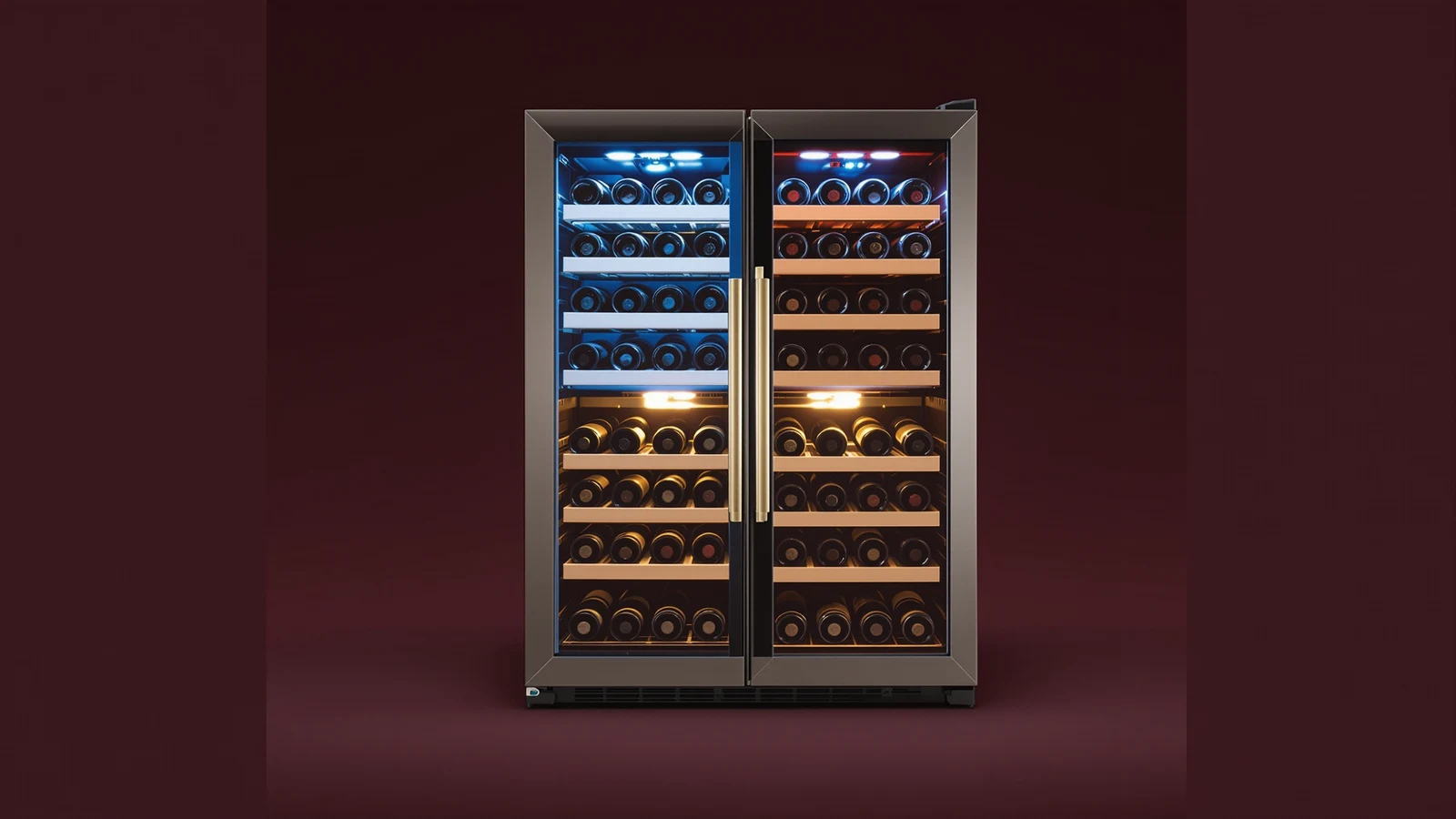
A temperature zone is a compartment with its own thermostat and setpoint. A dual-zone wine fridge is not two fridges bolted together: it is one insulated cabinet with a fixed internal divider, usually a horizontal panel roughly halfway up, plus a second sensor and control board for the compartment below. Almost always there is still one compressor and one refrigerant circuit cooling both halves, with the split managed by a damper, a second fan, or a resistive element that keeps the warmer zone from being dragged down by the cold one.
That matters for three reasons the marketing copy tends to skip.
First, the divider is physical. It occupies space that used to hold bottles, and it turns one flexible cabinet into two rigid ones. A 28-bottle dual-zone unit is not a 28-bottle single-zone unit with an extra button — it is a similar cabinet that lost shelf space to the partition and then had the rest allocated for you, in a ratio the manufacturer chose and you cannot change.
Second, because one compressor serves both, the zones are not independent the way two appliances would be. The colder zone dictates how hard the system works; the warmer zone is that cold air throttled or gently offset. That is why the achievable spread is narrower than the headline range suggests, and narrower still in a hot room.
Third, a zone divider is an airflow divider. On tall single-zone cabinets, the fix for warm air rising is fan-forced circulation holding the whole interior at one number. Split that cabinet and each half has less air to work with, so a cheap dual-zone unit can vary more shelf-to-shelf within a zone than a good single-zone unit varies top to bottom.
Single zone
One thermostat, one setpoint, the full cabinet available for whatever you own this month. Set 55°F and everything is stored correctly and most of it is servable straight from the door.
Dual zone
Two setpoints split by a fixed divider. Buys serving temperature for whites and storage temperature for reds at once — at the cost of bottles, flexibility and money.
Serving temperature versus storage temperature — the whole argument
Every honest version of this comparison comes down to one distinction. Once you have it, the rest is arithmetic.
Storage temperature is the number that keeps wine from ageing badly. For essentially everything — red, white, rosé, sparkling, the bottle you are keeping for a decade and the one you are keeping until Friday — that number is around 55°F. It does not differ by colour. What damages wine in storage is heat, light, vibration and above all swings: a cabinet that sits patiently at 57°F is kinder to a bottle than one oscillating between 50°F and 60°F while averaging 55°F. If your goal is to keep wine safe until you open it, one zone at 55°F is not a compromise. It is the correct answer for the whole collection.
Serving temperature is the number the wine should be when it reaches the glass, and this one does differ by colour. Full-bodied reds show best around 60–65°F, lighter reds a little cooler. Whites are generally served around 45–50°F, sparkling colder still, near 40–45°F. Serve a Chablis at 55°F and it is flabby; serve a Champagne at 55°F and it foams over and tastes broad and dull.
Put the two together. A single zone at 55°F stores everything perfectly and serves most reds acceptably — a red pulled at 55°F warms into its window in a few minutes on the counter, a nuisance nobody notices. The same 55°F is roughly ten degrees too warm for a white you want to drink now. That gap, and only that gap, is the argument for a second zone: dual zone parks whites at 45–50°F, ready to pour, while the reds sit at cellar temperature above them.
Which reframes the purchase. You are not buying better temperature control. You are buying the ability to skip the ice bucket — a real convenience some people happily pay $150 for, but not a wine-preservation upgrade, and anyone selling it as one is overselling. Our full temperature guide has the numbers by style.
The other way to read this: a dual-zone fridge run with both zones set near 55°F is just a single-zone fridge that cost more and holds fewer bottles. If you would not actually use the second setpoint, you are paying for a divider.
The honest test: the 80% rule
Here is the decision made concrete. Look at what you actually have, or will realistically have six months from now — not the collection you imagine owning.
- More than roughly 80% one colour? Single zone. If you own thirty bottles and twenty-six are red, dedicating half a cabinet to four whites is an expensive way to store air. Set 55°F and put the money into capacity instead.
- Genuinely mixed, and you drink whites often? Dual zone earns its price. The households that benefit are the ones where someone reaches for a cold white or a sparkling several evenings a week — exactly the pattern a serving zone is for.
- Mixed, but mostly reds with the occasional white? Single zone, still. That white gets thirty minutes in the freezer or two hours in the kitchen fridge. You have lost nothing but a little planning.
- Growing past fifty bottles? Single zone, almost without exception. At that size you want one correct storage temperature and maximum racks; serving is a separate, smaller problem, usually solved by a $40 countertop chiller rather than a permanent divider.
A second question, which almost nobody asks: is this cabinet a cellar or a bar? A cellar holds bottles until they are ready. A bar holds bottles you will open this week. Dual zone is a bar feature. If the unit lives in an entertaining space and gets opened four times a week, two zones make sense. If it lives in a closet and gets opened when a bottle is due, it does not.
What the divider costs you in bottles
The trade is easiest to see in dollars per bottle. Using the manufacturers' own capacity claims for the units on our main wine fridge guide:
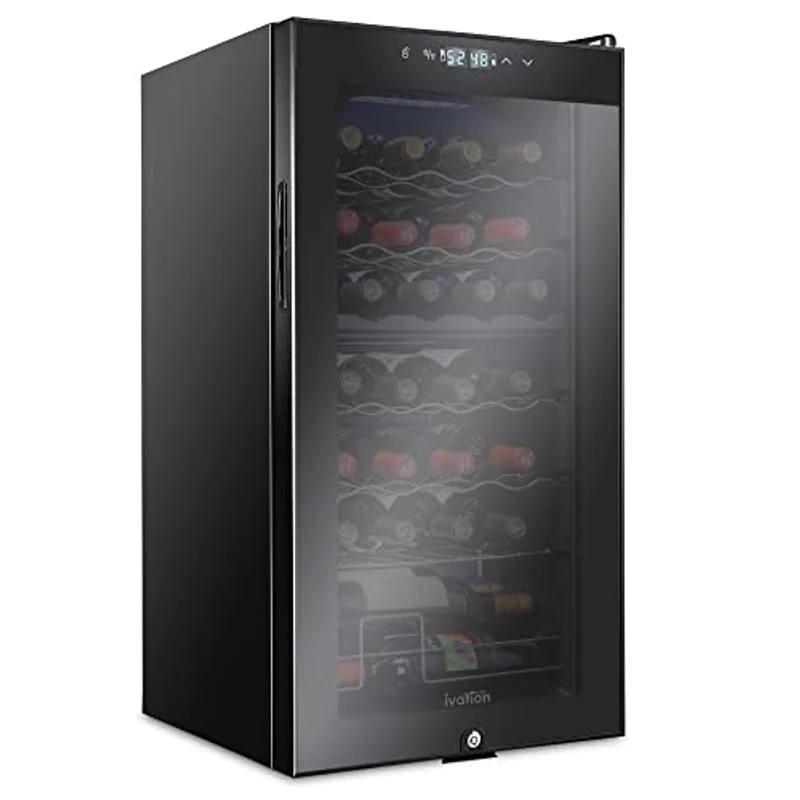
- The dual-zone Ivation 28 Bottle at $349.99 works out to about $14 per bottle of capacity.
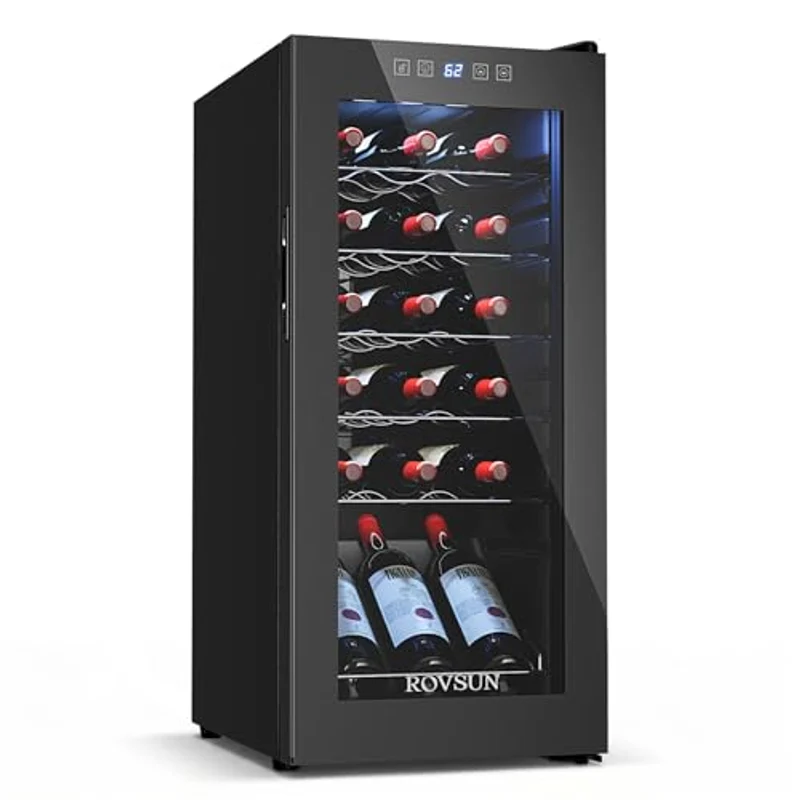
- The single-zone ROVSUN 18 Bottle at $169.99 is about $9 per bottle.
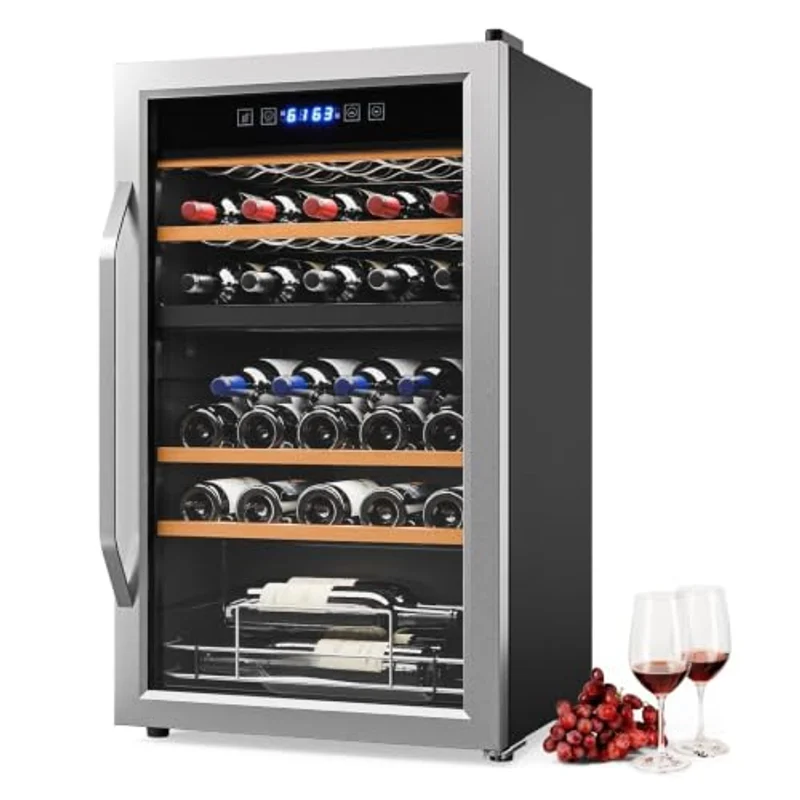
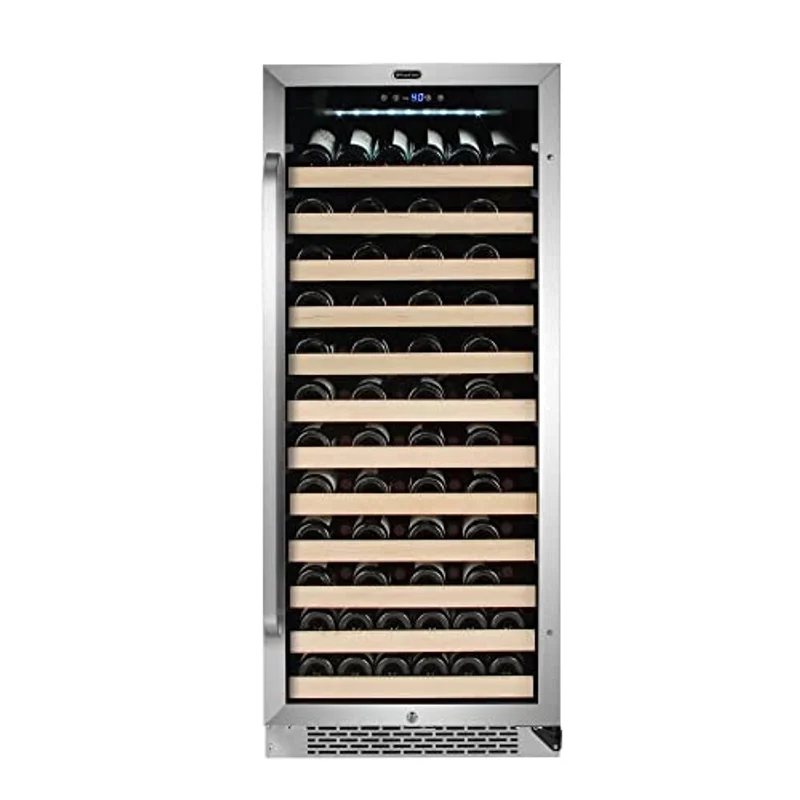
- The single-zone Whynter BWR-1002SD at $1,045.78 holds 100 bottles — about $11 per bottle, at more than three and a half times the Ivation's capacity.
The dual-zone premium is not enormous in absolute terms at the small end; the bigger cost is flexibility. In a single-zone cabinet, thirty bottles of anything fit anywhere. In a dual-zone cabinet, come home with a case of Riesling and you may find the lower zone full and the upper zone half empty, with nothing you can do about it. Running both zones at the same temperature recovers the flexibility, but not the shelf space the partition ate.
And the advertised numbers are optimistic on both sides of the argument. Manufacturers calculate capacity with slim Bordeaux bottles laid perfectly nose-to-tail. Burgundy and Pinot bottles are wider; Champagne bottles are wider and heavier; punted bases and wax capsules waste rack space. The theme that repeats across owner reviews of nearly every wine fridge at every price is the same: the real number is lower than the box says. Plan on roughly 70–80% of stated capacity. On a 28-bottle dual-zone unit that is realistically 20 to 22 bottles, split across two compartments whose ratio you do not control.
The trap: two compartments is not the same as two zones
This is the part that costs people money, and it is easy to check before you buy.
Plenty of inexpensive units are marketed as dual zone on the strength of a divider and two displays. What they lack is a meaningful differential between the halves. Because one compressor does the work and the split is managed passively, the warmer zone can often only run a handful of degrees above the colder one. A unit whose overall range reads 41–64°F may offer an upper zone of 54–64°F and a lower zone of 41–54°F — genuinely useful — or an upper zone of 50–64°F and a lower zone of 46–64°F, which is close to useless for the one job you bought it to do.
So the rule is simple: never buy a dual-zone fridge on its overall temperature range. Find the specification stating the range of each zone separately. If the listing gives one range for the whole cabinet, treat that as a warning sign — ask the manufacturer, or assume the differential is narrow.
For a unit that will actually do the serving-white job, you want a lower zone reaching roughly 41–45°F and an upper zone holding 55–65°F, independently settable across that spread. The Ivation 28 Bottle is quoted at 41–64°F, wide enough to run both ends properly; the Bonnlo 33 Bottle quotes the same envelope.
Two related points. Ambient temperature squeezes the differential — in a kitchen that reaches 85°F in August, a dual-zone unit will struggle to hold a 15-degree gap it manages effortlessly at 70°F. And it is worse on thermoelectric units, which can only pull about 20°F below the room to begin with, which is why serious dual-zone cabinets are almost always compressor units. We work through that trade in thermoelectric vs compressor. If a fridge is already failing to hit its setpoint, our not-cooling checklist is the faster read.
Wine-plus-beverage is a different product entirely
One category confusion is worth clearing up, because it sends people home with the wrong appliance.
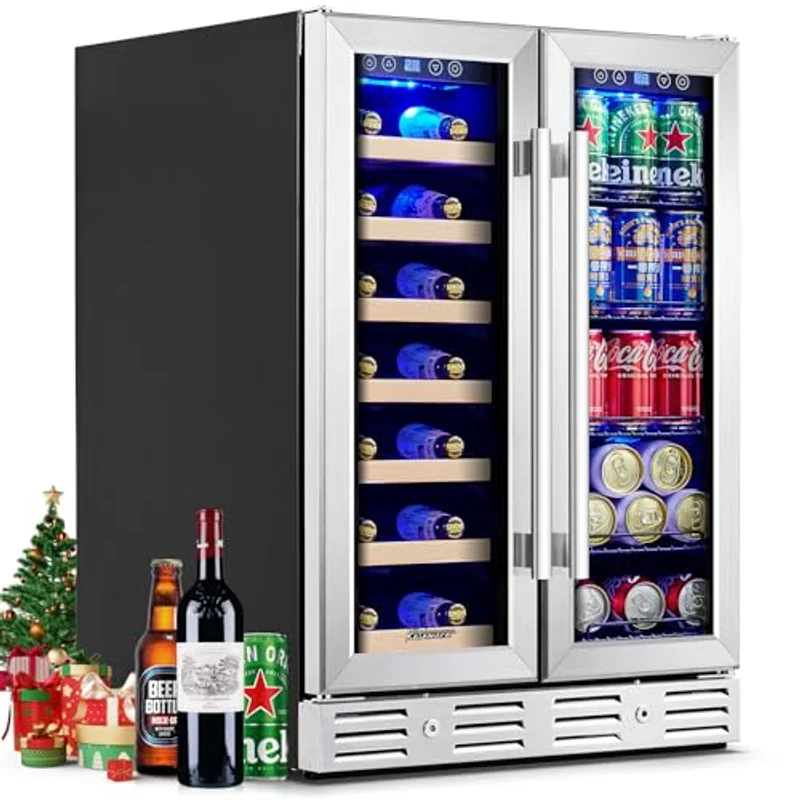
A number of units sold as "dual zone" are really wine-and-beverage centres: one side racked for bottles at cellar temperature, the other shelved for cans at drinking temperature, typically down around 38–40°F. The Kalamera 24-inch is the clearest example we recommend — 21 bottles on the wine side plus room for about 75 cans, in one compressor-cooled cabinet.
That is a genuinely good appliance for the right household, but it is not a two-wine-zone fridge and it does not solve the reds-and-whites problem. The beverage side runs too cold for white wine storage and it is shelved for cans, not racked for bottles. Buy it expecting a whites zone and you have bought a beer fridge with a wine compartment attached — which may be exactly right for you, but decide that on purpose. The capacity maths is in the numbers too: 21 bottles is far fewer than a 24-inch all-wine cabinet holds, because half the cabinet went to cans.
If you want two zones, these are the ones we would buy
All three are compressor units — a dual-zone thermoelectric cabinet generally cannot deliver what it promises once the room warms up.
Who should buy which, without the hedging
Buy single zone if: your collection is lopsided toward one colour; you are building storage rather than a bar; the cabinet is narrower than about 18 inches; you are heading past fifty bottles; or the budget is tight and the real choice is between a cheap dual-zone unit and a good single-zone one. In that last case take the good single zone every time — cooling type and build quality decide whether your wine survives, while the second zone only decides whether you plan ahead by an hour.
Buy dual zone if: you keep a real mix of reds and whites; someone opens a chilled bottle several times a week; the fridge lives where people gather rather than where bottles wait; and the unit publishes a per-zone range wide enough to deliver a 10–15 degree spread. If all four are true, the premium is money well spent.
Buy a wine-and-beverage unit if: the real congestion in your kitchen is cans competing with bottles for fridge space, and the wine side only needs to hold a working twenty.
One practical note outranks the zone question entirely: whether the unit is rated for built-in installation. Enclosing a freestanding fridge kills compressors, dual zone or not. If yours is going under a counter, read built-in vs freestanding before anything else. And if you are shopping at the very bottom of the market, our guide to small wine fridges under $200 covers where the compromises land there.
How we compared these — and what we cannot tell you
We compared published manufacturer specifications, current listed prices, the stated per-zone temperature ranges where a manufacturer publishes them, and the patterns that recur across verified owner reviews. Where a specification was ambiguous — and per-zone ranges are the most frequently ambiguous specification here — we said so rather than filling the gap with a guess.
We do not run a testing lab. We do not own these units and we do not physically test them, so you will not find an invented score out of ten on this site. You will not find a star rating or a review count either: the retailer API does not return them for this category, and we do not publish numbers we cannot source. What we can do is read the specifications carefully, track the prices, and report what the weight of owner experience says. On zones specifically, the theme that repeats is consistent and slightly deflating — buyers of cheap dual-zone units frequently find the two compartments living within a few degrees of each other, while buyers of single-zone units almost never complain about having one setpoint.
Prices quoted here were correct at the time of writing and change frequently. Confirm the current price before buying.
Frequently asked questions
Can I run a dual-zone wine fridge with both zones at the same temperature?
Almost always yes — set both to 55°F and you effectively have a single-zone cellar. What you do not get back is the shelf space the divider occupies, or the ability to lay a tall bottle across the boundary. A fine fallback if you already own one and your collection has drifted toward one colour; not a reason to buy one.
Does a dual-zone fridge use more electricity than a single-zone one?
Usually a little, though the difference is small next to the room the fridge lives in and how often the door is opened. The system has to hold a cold zone while preventing the warm zone from being dragged down with it, which on many designs means gently working against itself. A unit in an 85°F garage consumes dramatically more than the same unit in a 70°F kitchen, and that variable dwarfs the zone count. Any specific figure would depend on your rate, ambient temperature and usage, so we will not invent one.
Is 55°F really fine for white wine?
For storage, yes — 55°F is the correct long-term temperature for white as much as for red. It is only too warm for serving. A white pulled from a 55°F cabinet needs roughly thirty minutes in the freezer or a couple of hours in the kitchen fridge to reach its window. Whether that is an acceptable inconvenience or a daily irritation is the whole dual-zone decision.
How do I check whether a dual-zone unit has a real differential before I buy?
Look for the specification listing each zone's range separately, not the cabinet's overall range. You want the lower zone to reach about 41–45°F and the upper to hold 55–65°F. If only one range is published for the whole unit, treat that as an unanswered question — and if the seller cannot give you the per-zone figures, assume the spread is narrow and buy a single-zone unit with the money instead.
Written by Ilane Tall. Research-based comparisons of published specifications, current prices and verified owner reviews — we do not physically test these units and we do not publish invented scores.